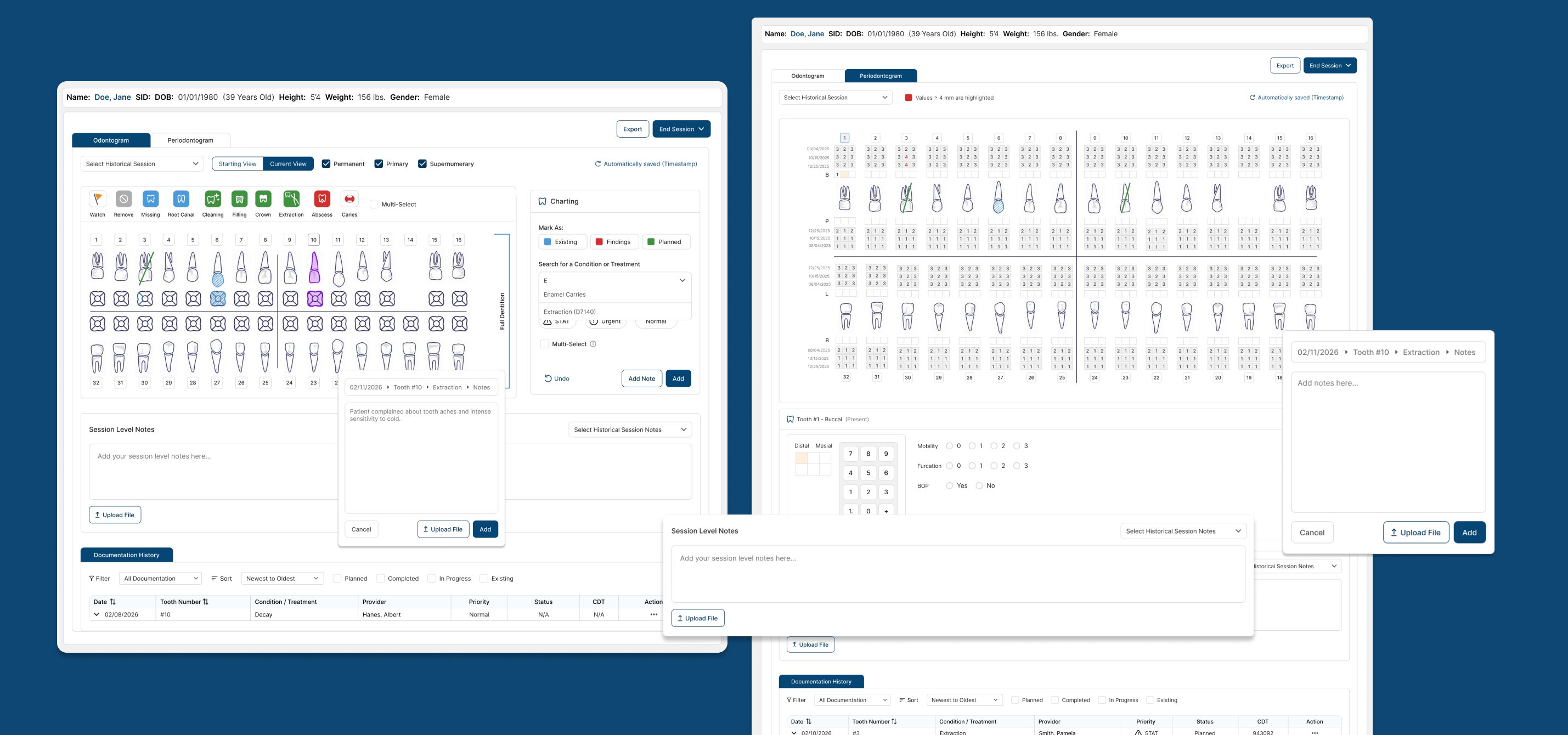
Fusion Dental
Transforming fragmented dental workflows into a unified, intuitive clinical experience.
Context
A net-new dental application built inside an EHR that had never supported dentistry, replacing a tool so limited in functionality that clinicians had gone back to paper.
This project focused on designing a net-new dental application within an existing healthcare ecosystem, aimed at improving clinical workflows and usability for dental providers. Our current solution severely lacked functionality, creating friction for users who needed efficiency and accuracy in a time sensitive and high stress environment, and leaving many of them to revert back to paper. The goal was to create an intuitive, scalable solution that aligned with existing EHR systems while addressing gaps in dental-specific documentation and treatment planning. As the Lead Product Designer, I was responsible for both defining the product direction and executing the end-to-end design process. I collaborated closely with stakeholders, developers, and subject matter experts to ensure the solution balanced clinical accuracy with usability. My role also included driving product decisions, prioritizing features, and aligning the experience with broader platform goals.
User Research
Correctional restrictions ruled out direct observation, so I ran weekly stakeholder sessions to surface constraints I could not have seen otherwise.
I conducted user research by working closely with internal stakeholders and leveraging domain knowledge from healthcare workflows to understand dental-specific needs. Due to the restrictive nature of correctional facilities, I needed to meet with our stakeholders on a weekly basis to ensure I captured the current limitations of their jobs; whether that was a physical lack of equipment or specific workflows that were used only in correctional spaces. This included identifying key user types such as dental providers, assistants, and administrative staff, each with distinct goals and pain points. I translated these findings into user personas that guided design decisions and ensured alignment with real-world workflows. As both a product manager and designer, I prioritized research insights to inform feature scoping and usability improvements. This foundation helped ensure that the product addressed both clinical efficiency and ease of use.
Key Pain Points
The existing software lacked the functionality clinicians needed to chart accurately, so staff kept reverting to paper.
Inefficient Documentation Processes: With a high turnaround of staffing, it was difficult to follow who had documented what and why.
Unintuitive Tooth Mappings: The current Odontogram and Periodontogram weren't enough to fully capture accurate representations of charting.
Fragmented Treatment Workflows: Treatments were currently documented with no way to tie a condition, date, or completion which resulted in users reverting back to paper for documentation.
The existing solution
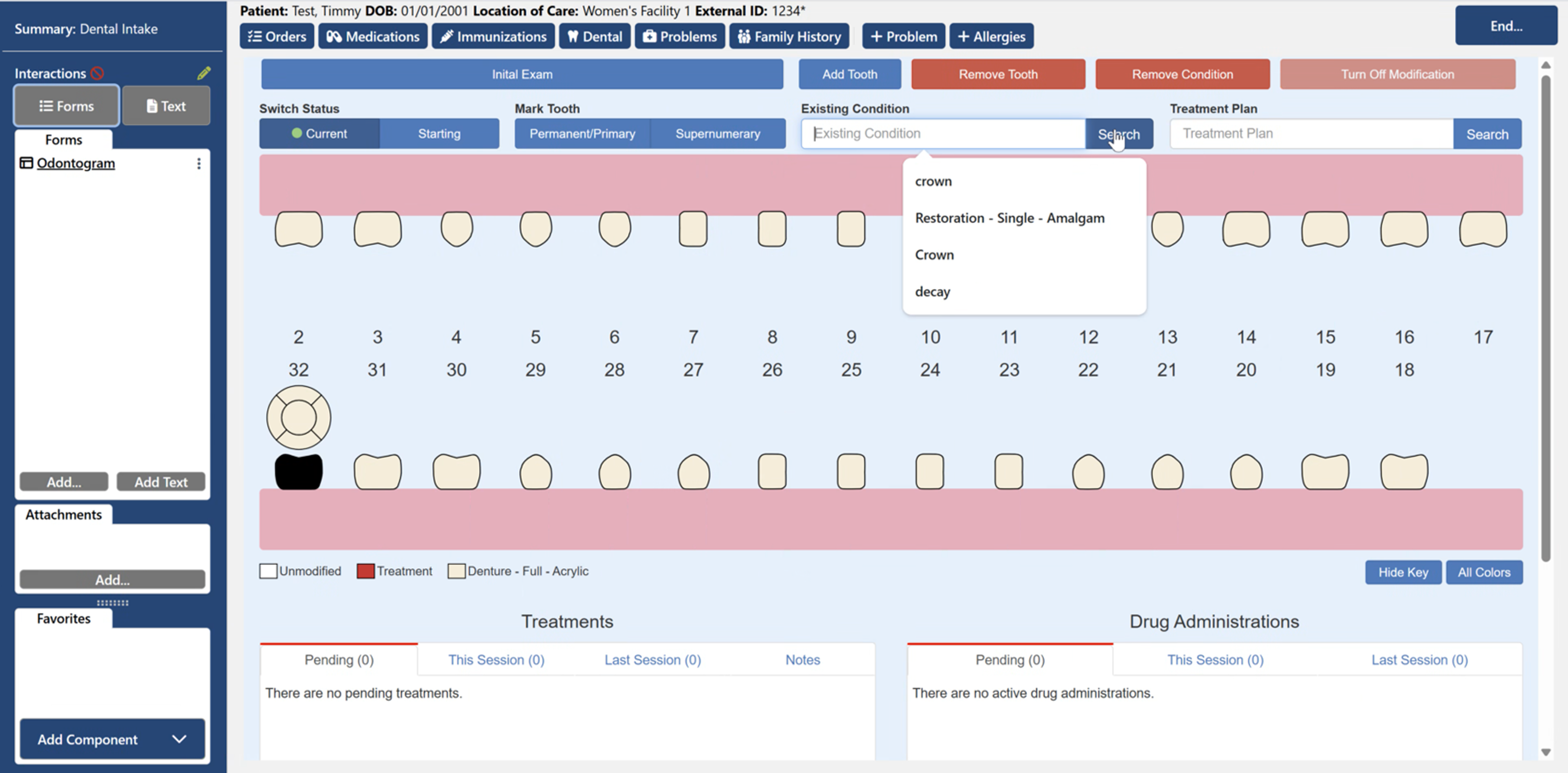
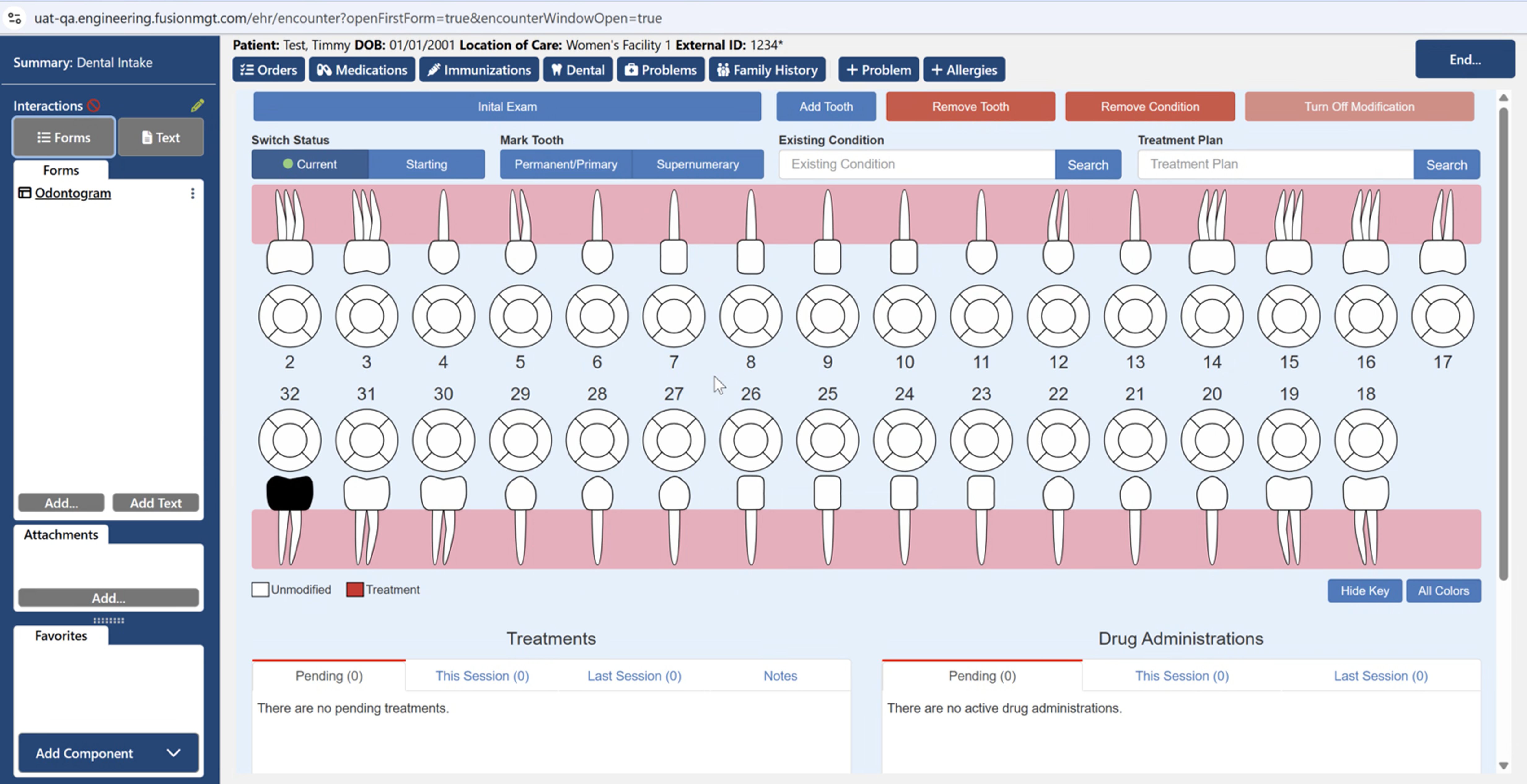
The solution clinicians were working with was a limited and unintuitive software that could not accurately capture treatments or conditions and lacked functionality such as adding proper odontogram drawings, adding notes to teeth, and charting on a periodontogram.
Requirements Gathering
Translating clinical needs into scoped, buildable features, and holding the line between what was feasible and what was usable.
I led the requirements gathering process by collaborating with stakeholders to define core features, workflows, and system constraints. This included creating detailed functionality lists, user stories, and acceptance criteria to ensure alignment across teams. I balanced business goals with user needs, ensuring that the product roadmap was both strategic and feasible. My role bridged product and design by translating requirements into clear, actionable design inputs. This ensured that development and design efforts remained aligned throughout the project lifecycle.
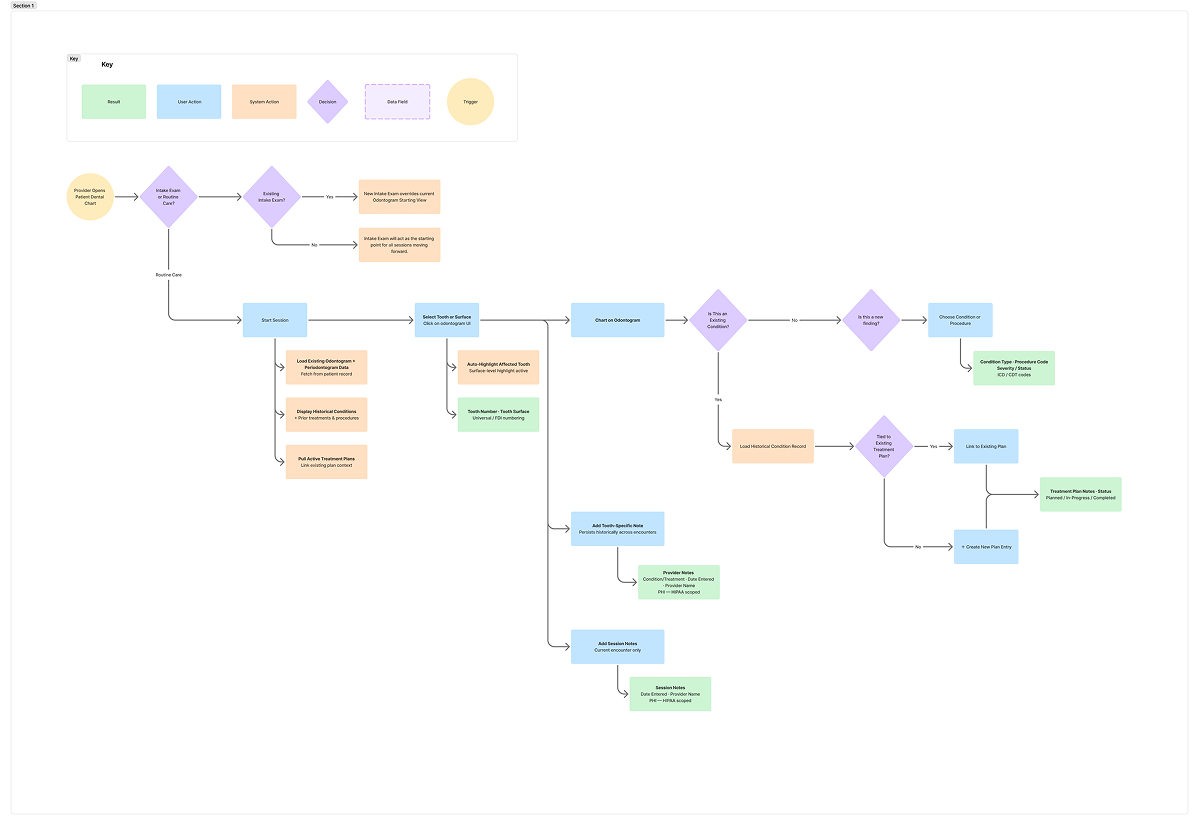
Low Fidelity Wireframes
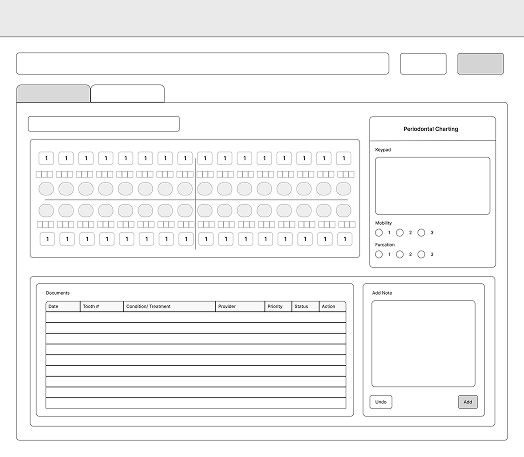
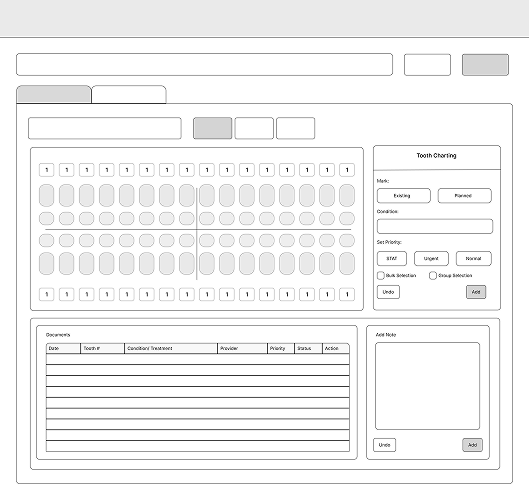
I created low-fidelity wireframes to map out core workflows, including patient charting, treatment planning, and dental record visualization. These wireframes focused on structure, usability, and interaction patterns rather than visual design. I iterated quickly based on stakeholder feedback and usability considerations, refining workflows to reduce complexity and improve efficiency. As the lead, I ensured that all wireframes aligned with both user needs and technical feasibility. This phase served as a critical foundation for validating ideas before moving into high-fidelity design.
UI Implementation
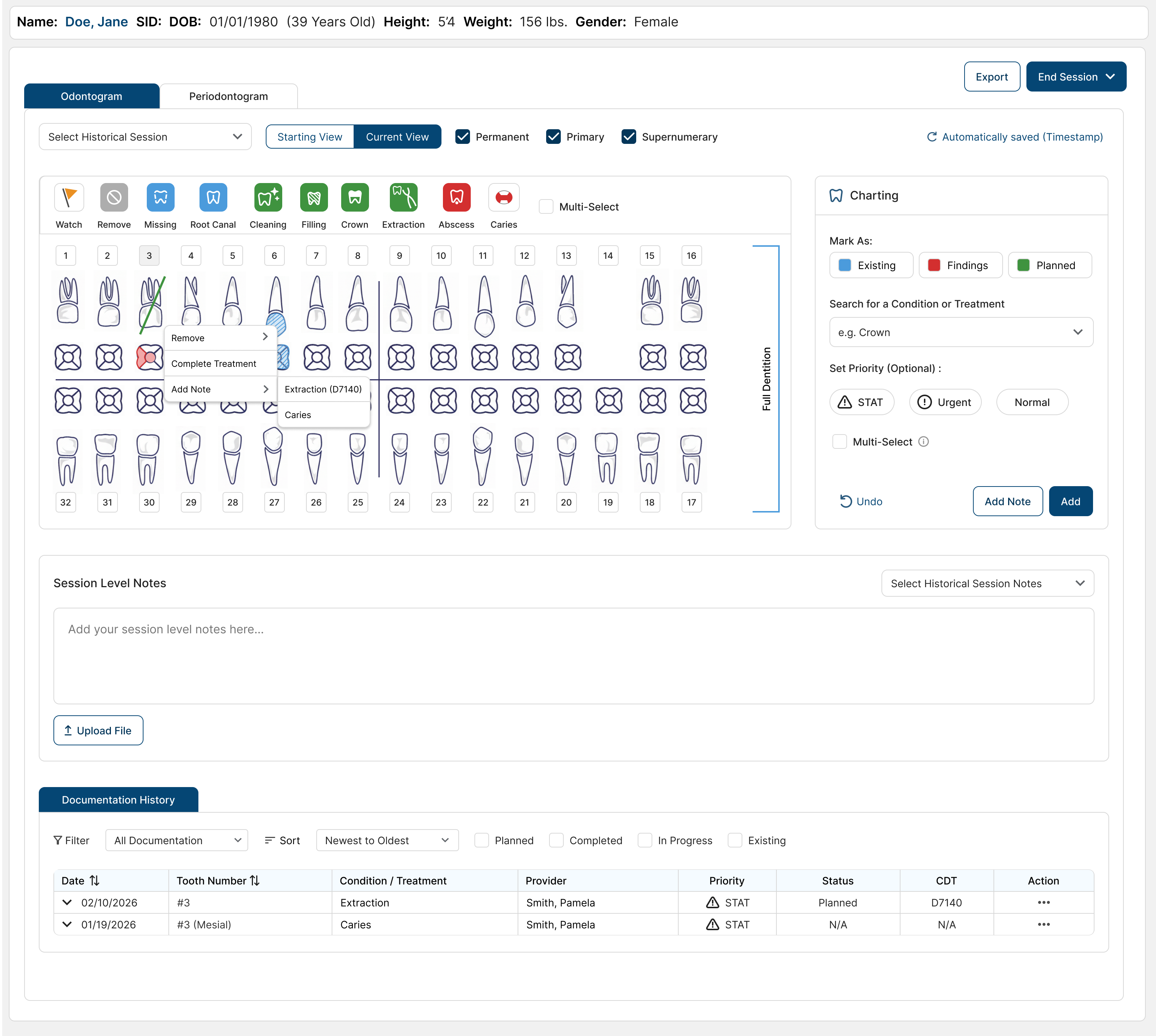
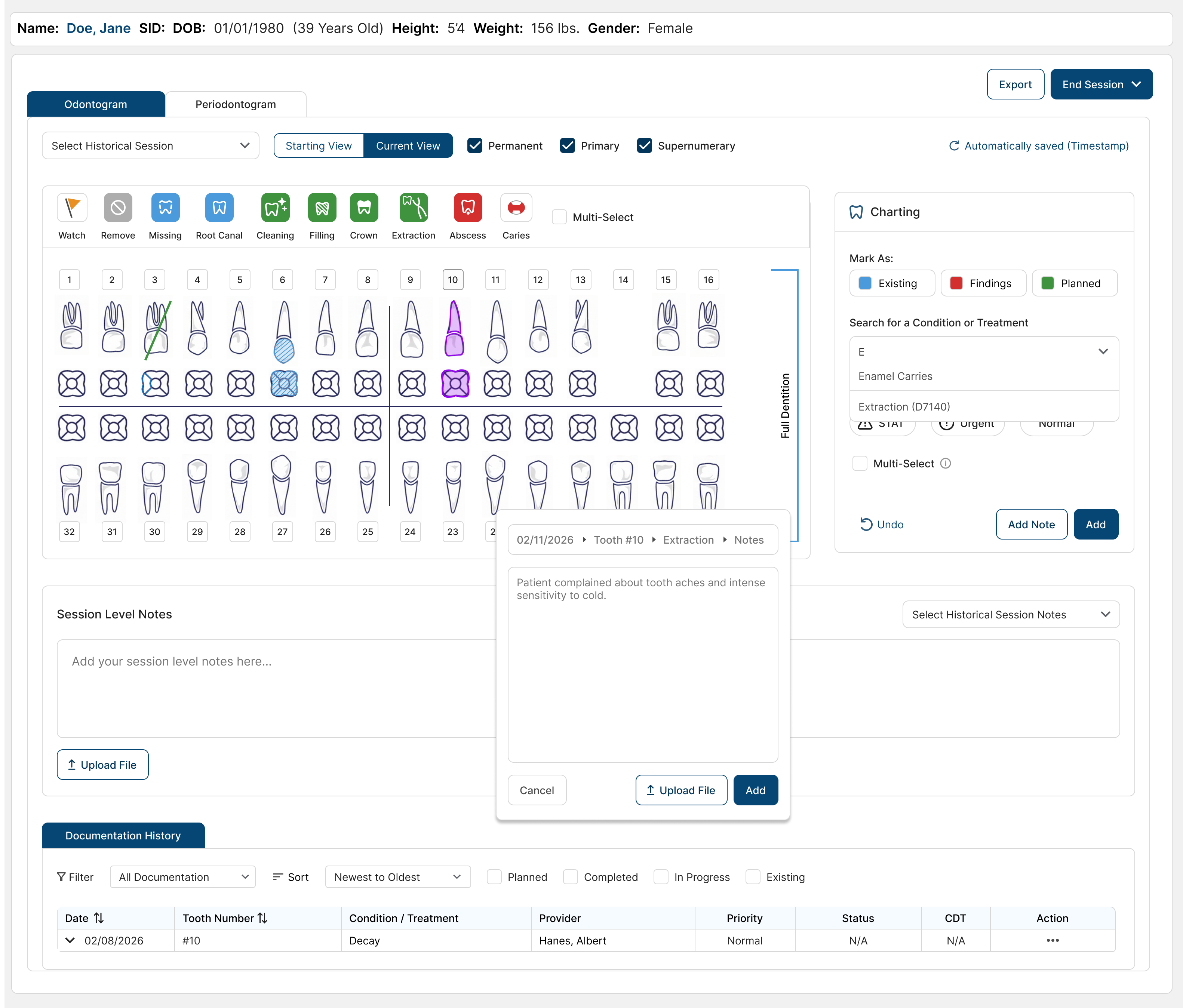
During the UI implementation phase, I translated wireframes into high-fidelity designs that aligned with our design system and accessibility standards. I defined visual patterns, component usage, and interaction states to ensure consistency across the application. I also led the implementation of scalable design components, ensuring alignment with development frameworks. My role included close collaboration with engineers to ensure accurate design handoff and execution. This phase emphasized both visual clarity and performance, particularly for clinical environments.
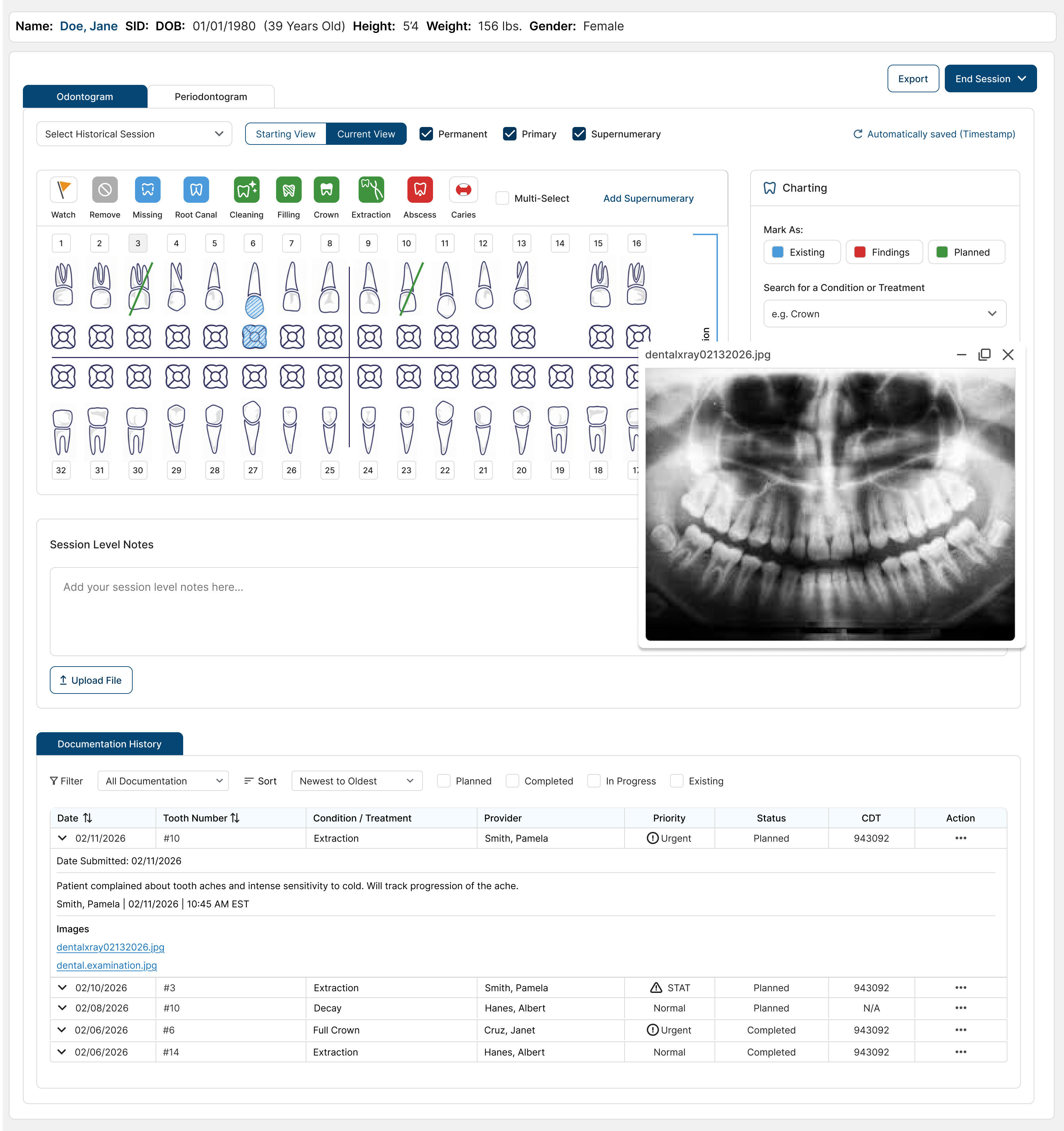
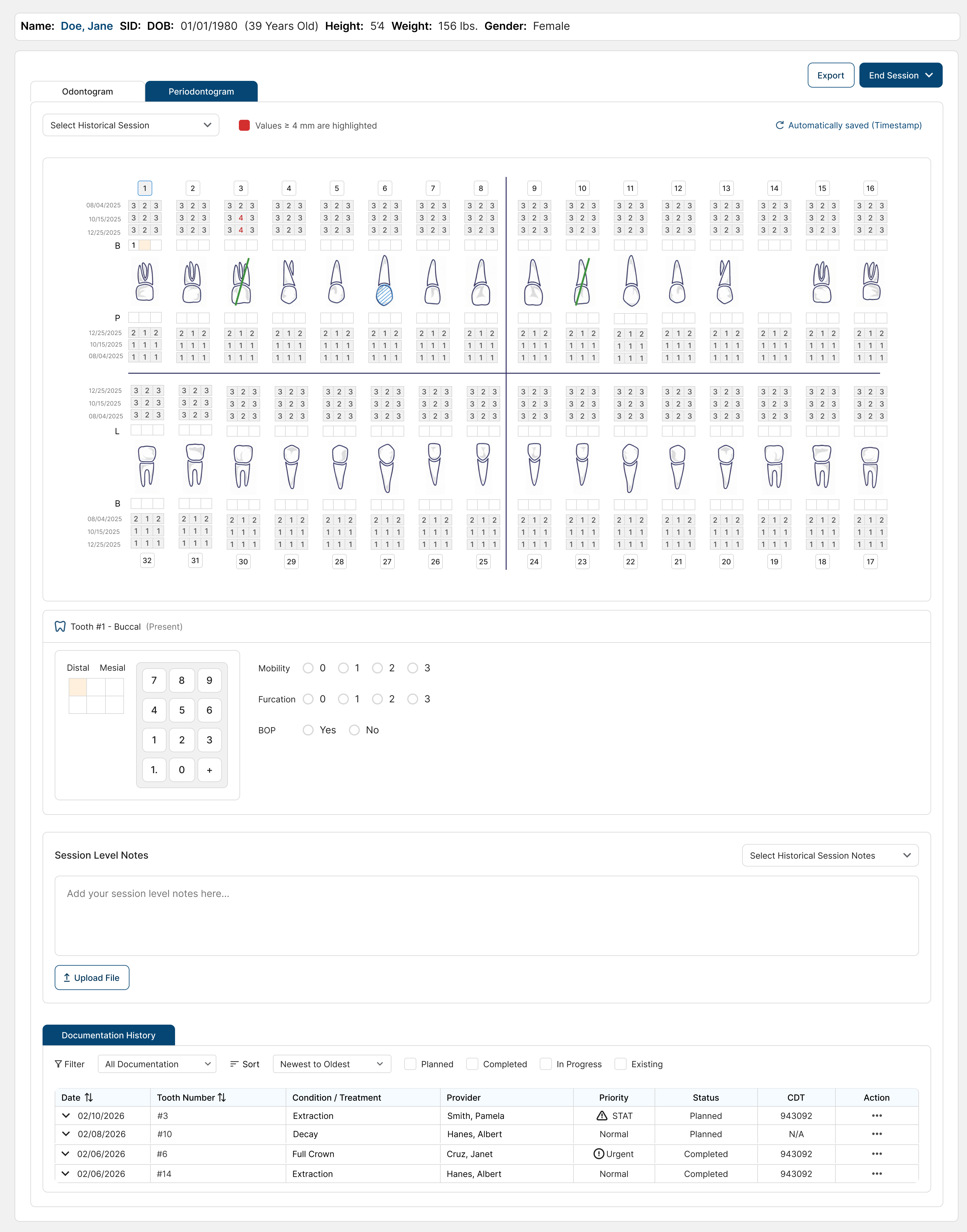
Solution
Charting became the centre of the application, and everything else was built to hang off what it records.
The odontogram became the centre of the application rather than one view among many, because charting is the task clinicians return to most and everything else hangs off what it records. Tying conditions, dates, and completion status directly to a charted tooth removed the gap that had been sending staff back to paper. With high turnover in correctional facilities, the interface also had to be legible to someone encountering it for the first time, so common actions stayed on the surface instead of behind menus that only a long-tenured user would know to look for.
Project Outcome
A net-new dental application inside an existing healthcare ecosystem, and the design work that retained a key client through a competitive RFP, preserving $10M in annual revenue.
The project resulted in the successful delivery of a foundational dental application that introduced improved workflows and a scalable design framework. It positioned the product for future enhancements while addressing immediate usability challenges. My contributions as Lead Product Designer helped establish design standards, streamline workflows, and align cross-functional teams. The application also served as a benchmark for future product initiatives within the organization. Overall, the project demonstrated the impact of integrating product strategy with thoughtful UX design. Additionally, we were able to directly retain a key client through a competitive RFP process and preserve $10M in annual revenue.
What I took from this
Sometimes there is little reference for the product you are building. When precedent doesn't exist, the people who will use it become the reference, and extensive research with them is the only way in.
Optimization matters most in the workflows people repeat. Frequently used paths deserve disproportionate attention, because small friction compounds every time.